
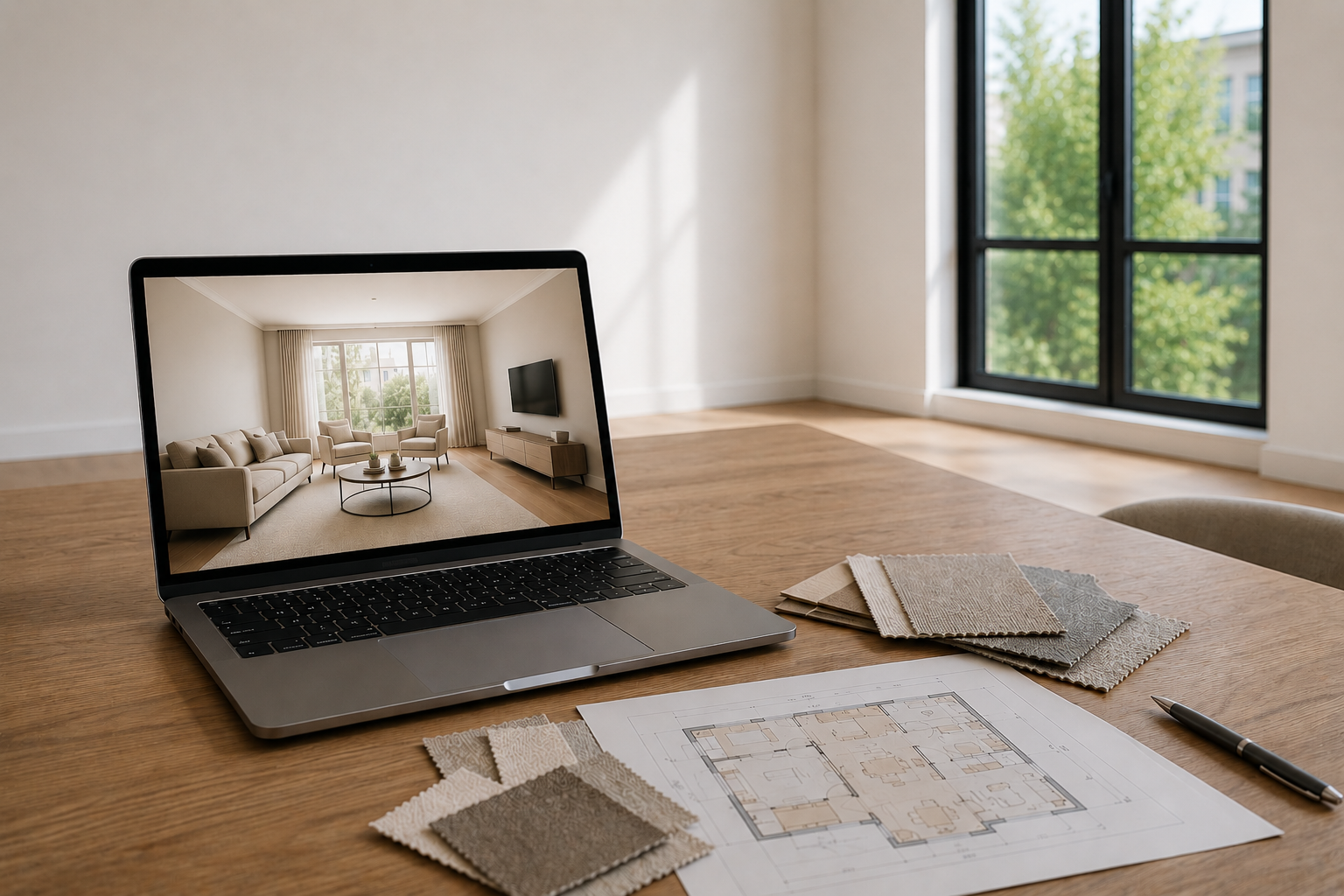
Virtual Staging & AI: The Future of Real Estate or a Risk to Seller Equity?
Artificial intelligence is transforming industries at an extraordinary pace, and real estate marketing is no exception. From AI generated room designs to virtually furnished listing photos, today's technology can create polished visuals in a matter of hours. For sellers and real estate agents, virtual staging offers an exciting way to showcase a property's potential while reducing upfront costs.
But as AI becomes increasingly capable and accessible, an important question remains:
Can virtual staging replace professional property staging?
The answer is more nuanced than many people realize.
What Is Virtual Staging?
Virtual staging uses digital design software and AI technology to add furniture, décor, artwork, and styling elements to photographs of a property. Empty rooms can be transformed into inviting living spaces before physically moving a single item into the property.
The appeal is obvious:
- Faster turnaround times
- Lower upfront investment
- Easy style customization
- Ability to test multiple design concepts
- Useful for remote consultations
- Demonstrating furniture scale and layout possibilities
Why Virtual Staging Is Becoming So Popular
Today's buyers begin their search online. In many cases, a listing's photographs determine whether a buyer books a showing at all. AI-powered design tools have accelerated this process significantly. What once required hours of manual editing can now be completed in a fraction of the time.
For many listings, virtual staging can be an excellent first step in showcasing potential.
According to the National Association of Realtors®, 83% of buyers' agents reported that staging made it easier for buyers to envision a property as their future home. While virtual staging can assist with visualization online, the physical property must still deliver that same experience when buyers arrive in person.
Where AI Falls Short and the Risks
While virtual staging can enhance photographs, it cannot physically improve the property itself.
A digitally furnished image cannot:
- Repair worn finishes
- Address maintenance concerns
- Improve traffic flow
- Correct awkward furniture layouts
- Resolve functional issues within the property
- Influence a buyer's in person experience
This is where many sellers and agents unknowingly expose themselves to risk.
When buyers arrive for a showing, the property must still meet the expectations created online. If there is a significant gap between the photographs and the actual experience, trust can erode quickly.
And in Real Estate, trust directly impacts perceived value.
Like any marketing tool, virtual staging should be used responsibly. Potential risks affects the seller’s equity, buyer’s trust and agent’s reputation.
Listing photos should accurately represent the property. Virtual enhancements that conceal defects, alter structural features, or create false impressions may expose parties to potential liability concerns.
The Difference Between Marketing a Property and Preparing a Property
One of the most common misconceptions about staging is that it is simply decorating. Professional property staging involves much more than making a property look attractive.
A Certified Staging Professional® evaluates the property from a buyer's perspective, considering factors such as:
- Property condition
- Buyer expectations
- Layout functionality
- Traffic flow
- Market competitiveness
- Visual presentation
- Perceived value
Virtual staging can assist with showcasing, but it cannot replace the assessment and preparation phases that often have the greatest impact on buyer perception.
Where AI Works Best
Rather than replacing professional staging, AI performs best when used as a planning and visualization tool.
Some of the most effective applications include:
- Testing furniture layouts before purchasing
- Presenting design concepts to clients
- Visualizing renovations or updates
- Supporting remote consultations
Used this way, AI becomes a valuable extension of the staging process rather than a substitute for it.
The Future of Property Staging
Artificial intelligence will continue to evolve, and virtual staging will undoubtedly become more sophisticated.
However, buying decisions are still made by people.
The emotional response created when a buyer walks through the front door, experiences the flow of a space, and imagines themselves living there cannot be generated by software alone.
Technology can help tell the story. Professional staging ensures the story is true.
At Delville Designs, we embrace innovative tools such as virtual staging and AI visualization while recognizing that successful property preparation requires more than attractive images. Our goal is to protect seller equity, support buyer confidence, and create spaces that deliver on the expectations established online.